
Hashtags from hell
A look back at some of the worst brand tweets of all time

The Internet can be a scary place. From 2am drunk tweets to accidentally liking your crush’s Instagram post from 2017, we’ve all had our fair share of faux pas. I myself, as a young teen, took to Facebook to share a post with all my friends and family explaining that I had been rejected by a girl at school that day and to thank them all for their support during this difficult time. Yeah…not my best moment.
However, it could have been worse. I could, for example, have been a social media marketer in the early 2010s. You see, as social media emerged as a powerful marketing tool, many companies learned the hard way that a single post could make or break their reputation. Twitter, now X, was particularly tricky. It offers a space for unfiltered expression, making it challenging for brands to strike the right balance between being engaging and avoiding controversy. Mistakes could lead to boycotts, stock price drops, and long-lasting damage to a company’s reputation.
So, let’s wind back the clock and look at five of my favourite terrible brand tweets and see what they can teach us about the art of social media marketing.
American Airlines Auto-Response Fiasco
Starting us off we have a relatively small fail from American Airlines (AA) who, in 2013, decided to setup an auto-response bot on their Twitter that would reply to any post they were tagged in with a positive message thanking the user for their support.
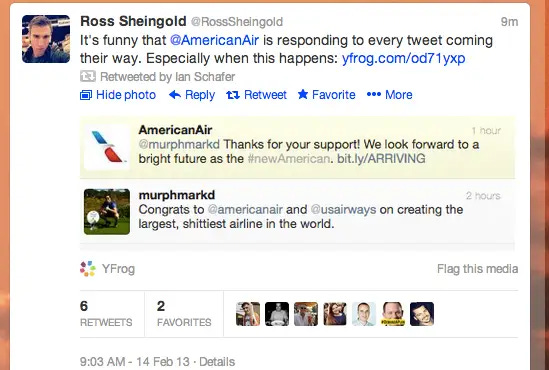
Unsurprisingly, this quickly backfired as users began tagging the airline in inappropriate posts, resulting in AA deleting the problematic tweets and shutting down the bot. Just goes to show that, when it comes to engaging with customers online, authenticity is more important than automation.
Kenneth Cole’s Cairo Tweet
In January 2011, the world watched as Egyptians took to the streets to protest the dictatorial rule of Hosni Mubarak, who had been in power for 30 years. As the revolution spread across the country, people turned to Twitter to share and discuss the unfolding situation live using the hashtag #Cairo.
Now you might be thinking, how could anyone possibly look at this situation and think they could utilise it to promote their brand? Well, allow me to introduce you to the American shoe designer, Kenneth Cole.
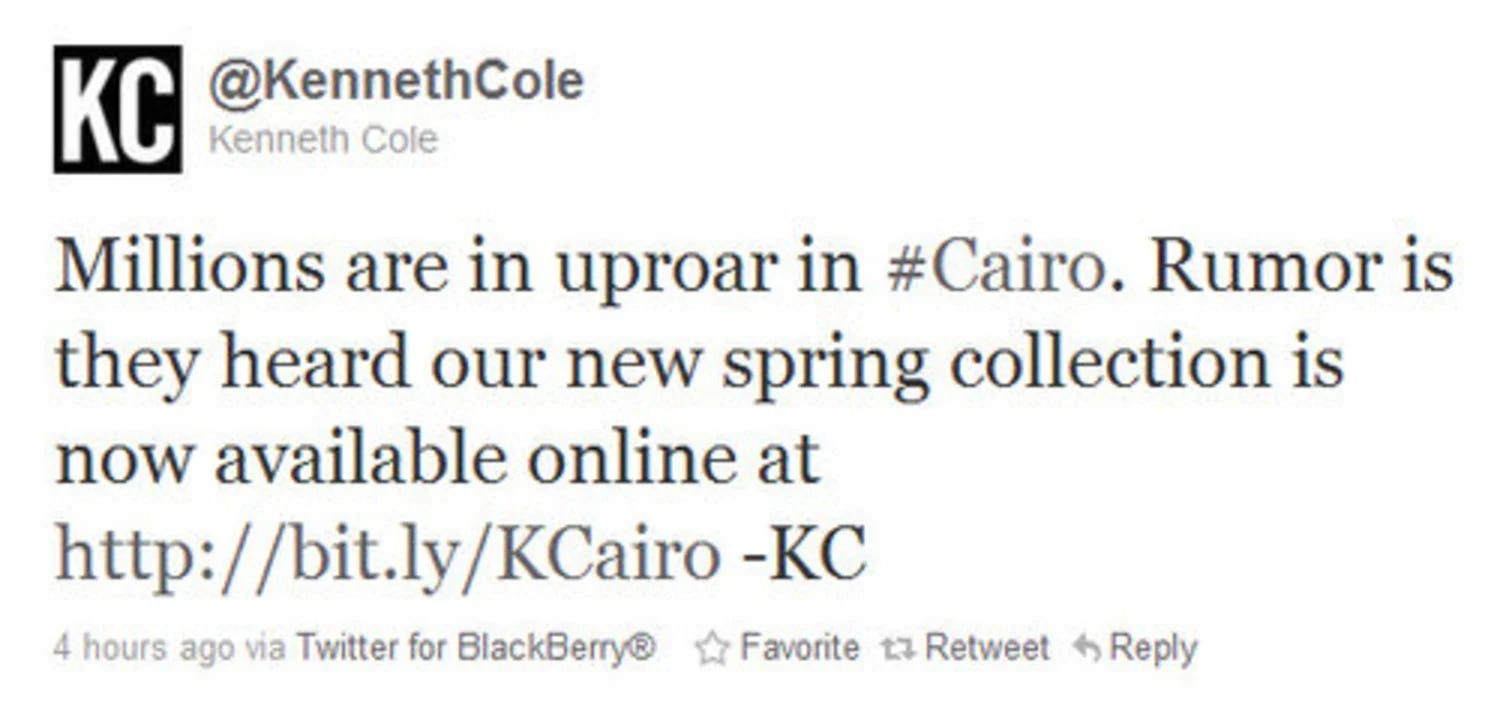
People were quick to voice their fury at Cole and he was forced to delete it and apologise. However, this was not enough to satisfy the Twitter horde which went on to create the hashtag #KennethColeTweets, leading to many comical tweets mocking the designer.
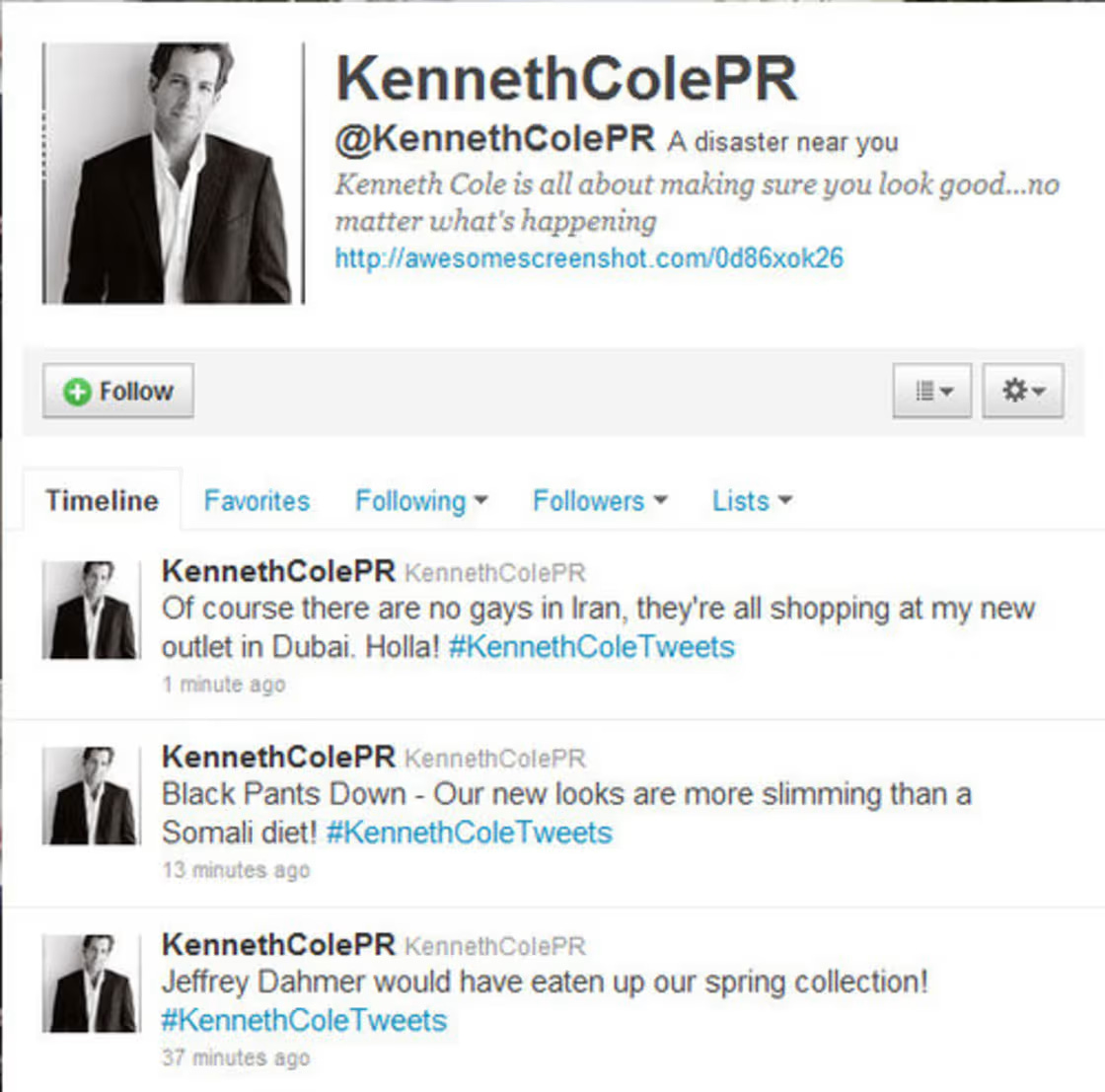
So what can we learn from this? It’s quite simple. Don’t hijack humanitarian crises to promote your brand. You’d think that wouldn’t need to be said but alas here we are.
Cinnabon’s Carrie Fisher Tweet
After the death of beloved Star Wars actress Carrie Fisher in 2016, Cinnabon tweeted an image of her as Princess Leia with a Cinnabon roll as her hair, captioned, "RIP Carrie Fisher, you’ll always have the best buns in the galaxy."
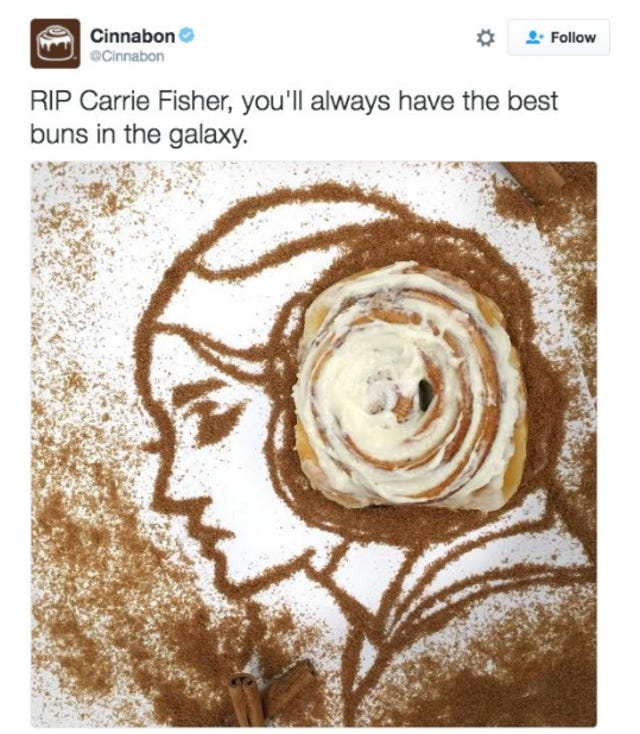
Unsurprisingly, using the death of an iconic celebrity to promote a product did not go down well with many labelling the tweet as insensitive, resulting in the standard delete/apology from the baked goods manufacturer.
DiGiorno’s #WhyIStayed Misuse
Perhaps one of the most infamous twitter mishaps came in 2014 when the pizza company DiGiorno mistakenly used the #WhyIStayed hashtag, meant for sharing stories of domestic violence, to promote pizza, tweeting, "You had pizza."
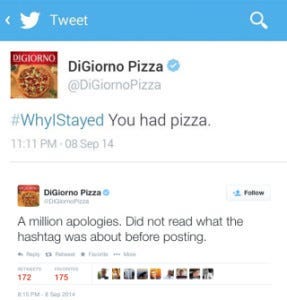
Let this be a lesson to every social media marketer. Always always always check what a hashtag means before you join in, as you might be walking into a PR nightmare. As the saying goes, “measure twice, cut once”.
KFC Australia’s NSFW ‘Hot & Spicy’ post
In recent years, KFC Australia’s marketing team have been smashing it with their iconic “Did someone say KFC” campaign, a fast food fashion show and a fine-dining degustation menu; earning them plenty of awards and brand recognition.
However, this hasn’t always been the case, as reflected by a now-deleted tweet from 2016 meant to promote their new Hot & Spicy range of chicken.
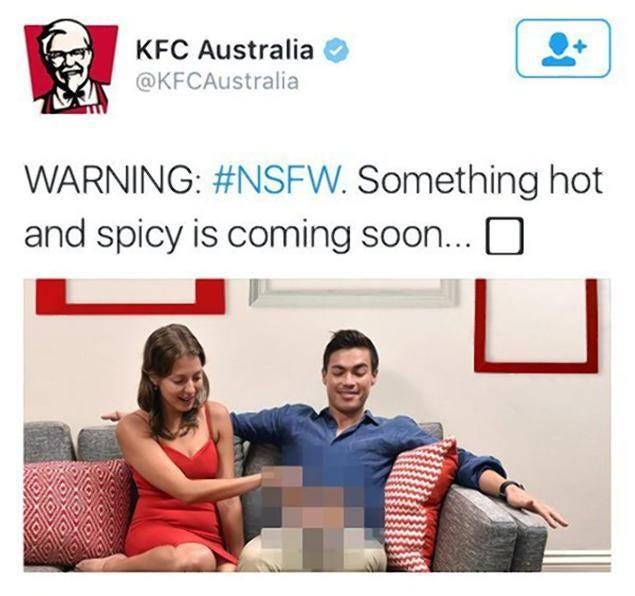
The NSFW tweet was deemed ‘disturbing’ by many with one user asking what ‘herbs and spices’ their marketing department had smoked before making the post. Using adult humour in your marketing can be effective just as long as it doesn’t contradict your core brand values. As a family-friendly brand, KFC should have thought twice before creating something reminiscent to the opening scene of a porno.
What lessons have we learnt?
It’s clear by now that navigating the social media landscape can be akin to walking a tightrope for brands, with every post having the potential to either boost or damage a reputation. The examples highlighted illustrate the fine line between creative marketing and public relations disasters.
They teach us valuable lessons about the importance of sensitivity, authenticity when engaging with your online audience, understanding social media hashtags/trends before joining in and the dangers of using inappropriate humour. These marketing mishaps highlight the importance of social media teams being well-informed, thoughtful, and in tune with the current cultural and social climate.
Ultimately, these examples serve as cautionary tales for the power of social media and the responsibility brands have in wielding that power carefully and respectfully. As we move forward in the digital age, let these stories remind us that while innovation and creativity in marketing should be applauded, it should never come at the expense of empathy, respect, and common sense.